Read the storyA great example of a partnership that brings students, experts and real-life challenges together.
Thomas More & UC Leuven-Limburg
AHLEX helped students discover aviation by experiencing it first-hand. By linking STEAM learning to real airport challenges, the programme made aviation more tangible, exciting and relevant for future talent.
Frank Vols, Sr Strategy & network professional

The aviation sector faces a structural talent challenge: attracting enough qualified technical and logistics profiles to meet growing demand. Traditional recruitment on the labour market alone is not sufficient, and the future is also in schools, yet many STEAM students do not yet see aviation as a realistic or attractive career path.
The programme needed to spark interest early in students' school careers by making aviation exciting, relevant and connected to what they learn at school.
AHLEX tested an experiential learning approach in which students learned by doing, through practical challenges, experiments, flight simulators and a stronger link between school content and the airport world.
In 2024, two test programmes reached 299 students from 17 schools, with a first pilot week in April and a broader programme in November, combining preparation, on-site experience and follow-up.
Students discovered aviation as an innovative and meaningful sector, schools strengthened STEAM learning through real-life application, and AHLEX gained clear insights for building future youth programmes.
STEM and aviation discovery programmes developed with schools, UCLL and aviation partners.
The aviation sector faces a structural talent challenge: attracting enough qualified technical and logistics profiles to meet growing demand. Traditional recruitment on the labour market alone is not sufficient to fill that need. The future is also in schools, but many STEAM students in secondary education do not spontaneously see aviation as a realistic or attractive career path.
AHLEX wanted to explore how young people could be inspired earlier in their school careers. Not through brochures or lectures, but through experiences that make STEAM tangible and show how mathematics, physics, geography and problem-solving connect to real work in aviation. In 2024, AHLEX tested this approach through the Newton Room concept, an international initiative of First Scandinavia and Boeing. Newton Room offers experiential learning modules in which students explore STEAM through practical challenges and playful engagement. The goal was to learn which methodology could truly spark curiosity and connect young people to aviation through practical challenges, experiments and applied knowledge. The core principle was learning by doing: students were not passive observers, but explored aviation through concrete tasks that made school knowledge feel relevant.
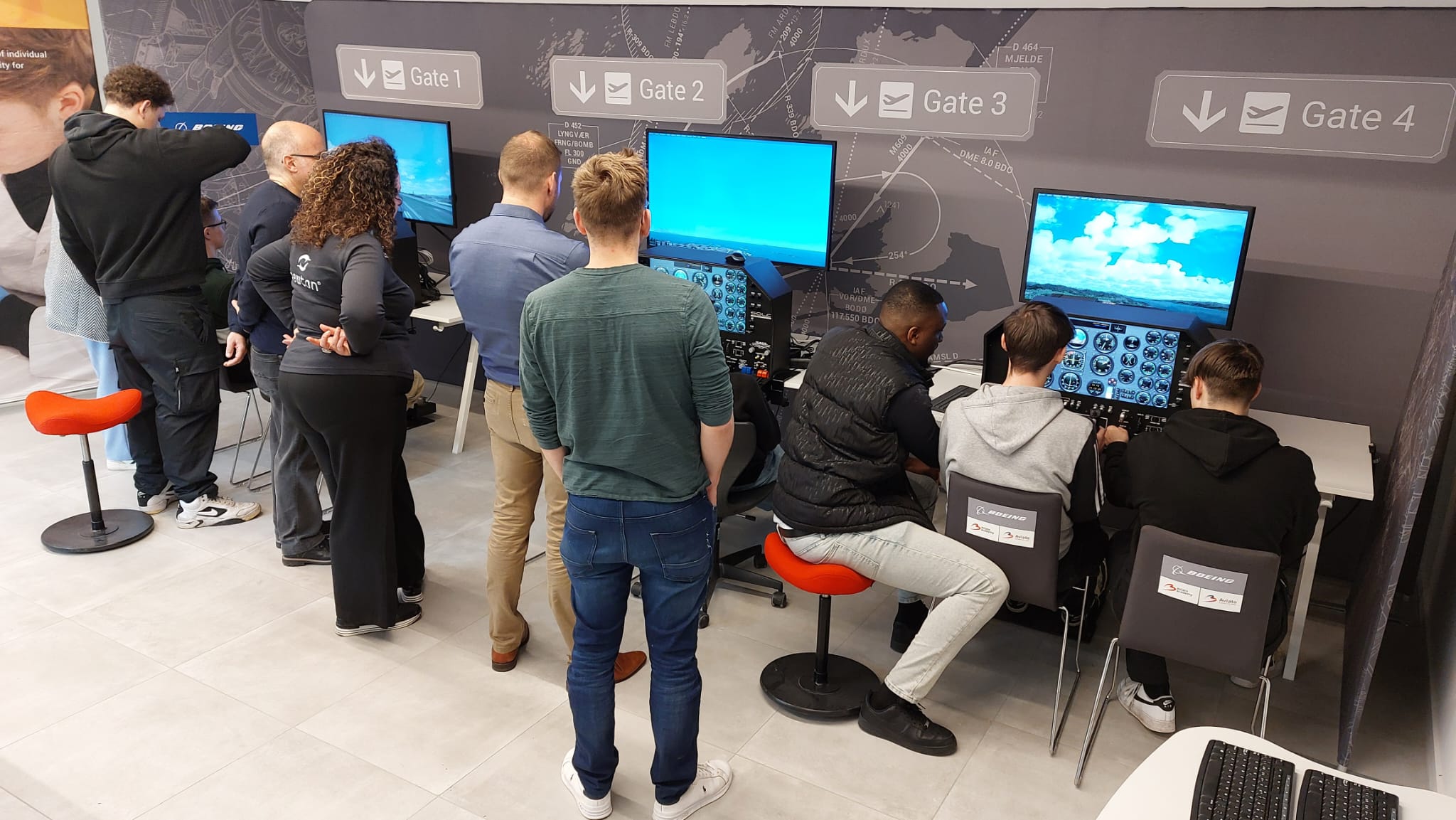
The first test programme took place from 26 April to 3 May 2024. During short half-day sessions, 111 students from 9 schools explored flight engineering, kinetic energy and flight simulators. They designed and tested paper airplane wings, observed energy conversion with a steel marble and sensors, and experienced the excitement of operating a flight simulator. As part of their internship, 9 teacher-training students from UCLL gained hands-on experience by acting as Newton Teachers and guiding the students through the learning moments.
The second programme, Up in the Air with Numbers, ran from 12 to 22 November 2024 and reached 188 students from 8 schools. This time, the experience was embedded in a wider school trajectory, with preparation before the visit and reflection afterwards. During the AHLEX day, students took on the roles of pilots, engineers and navigators. They explored distance, speed and time, prepared a flight plan, trained in the simulators and flew a mission while observing, prioritizing and reporting to a fictional Joint Rescue Coordination Centre.
The location of AHLEX at the heart of Brussels Airport added to the impact. Students were not learning about aviation from a distance. They stepped into an airport environment, experienced the scale of the sector and discovered how classroom knowledge can connect to real operational needs. Some schools even travelled from Ostend and Kapelle, showing how strong the interest in the programme was.
For many students, the experience of sitting in a flight simulator was unforgettable. What they usually encounter as abstract formulas in the classroom suddenly became real as they applied distance, time and speed to fly an aircraft. For some, it was the very first time they thought: “Maybe a career in aviation could be for me.”
For the UCLL students involved in the first pilot, the project was equally transformative. Guiding younger students in an international and technical context boosted their confidence as future educators and inspired them to connect theory and practice in creative ways.
Across the different audiences, the impact was clear. Students discovered aviation as a realistic and exciting career option. Schools strengthened their STEAM goals with a practical and inspiring programme. UCLL and its teacher-training students gained a unique internship experience in an international, real-life context. And the aviation sector benefits from initiatives that connect future talent to real-world challenges.
And for AHLEX, the project was a success. It showed that the best way to attract young people into aviation is to let them experience it through practical challenges, experiments and applied knowledge. The insights from these test programs now help AHLEX develop its own programs to inspire young people and connect them more sustainably to the aviation sector.
Some of the feedback we’ve received
“It was a well-thought-out project. The biggest added value was the totality of the experience. Theory was well-balanced with hands-on activities.”
“This project meets the STEAM goals, allowing students to apply physics, math and geography in a realistic and exciting context.”
“Brussels Airport is such an impressive environment. This programme gave students a behind-the-scenes look they will never forget.”
“It is essential for secondary schools to keep investing in STEAM education. Aviation companies need technically skilled staff more than ever. That is why these programmes are crucial to stimulate student interest.” Isabelle Borli, AHLEX
“Our teacher-training students gained a unique experience outside the classic classroom, immersed in an international environment.” Marc Vandewalle, UCLL
Read the storyA great example of a partnership that brings students, experts and real-life challenges together.
Thomas More & UC Leuven-Limburg
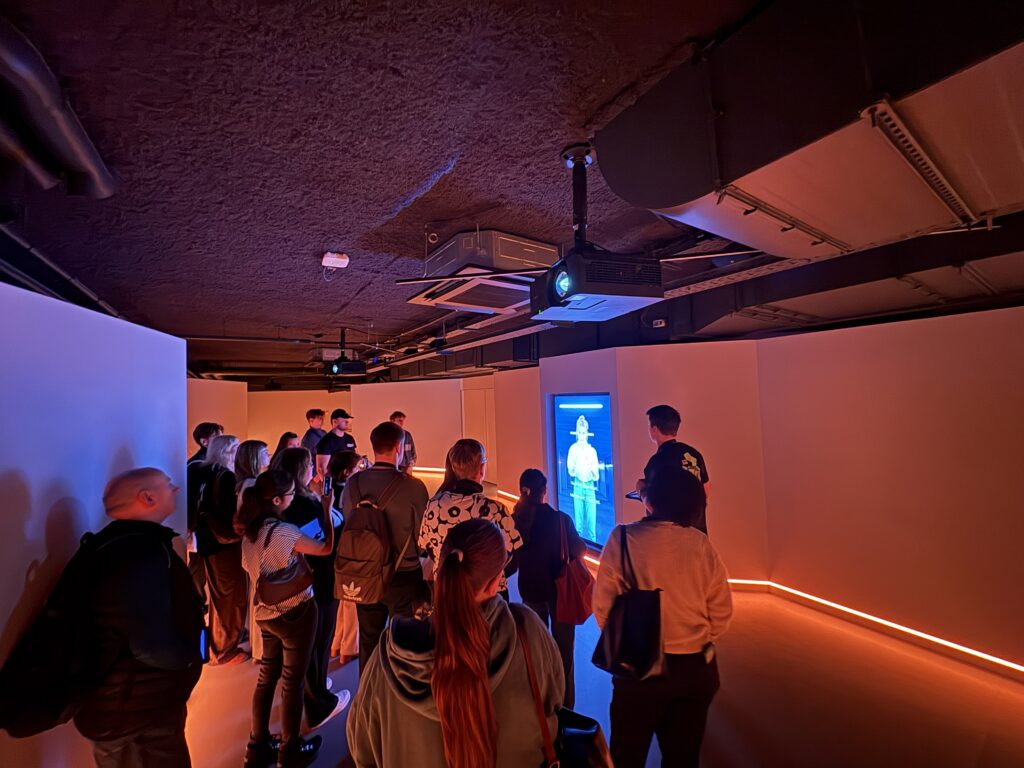
Read the storyIt was great that the students were able to explore and experience the room for themselves, and on top of that there was a fun but effective brainstorming session.
UC Leuven-Limburg
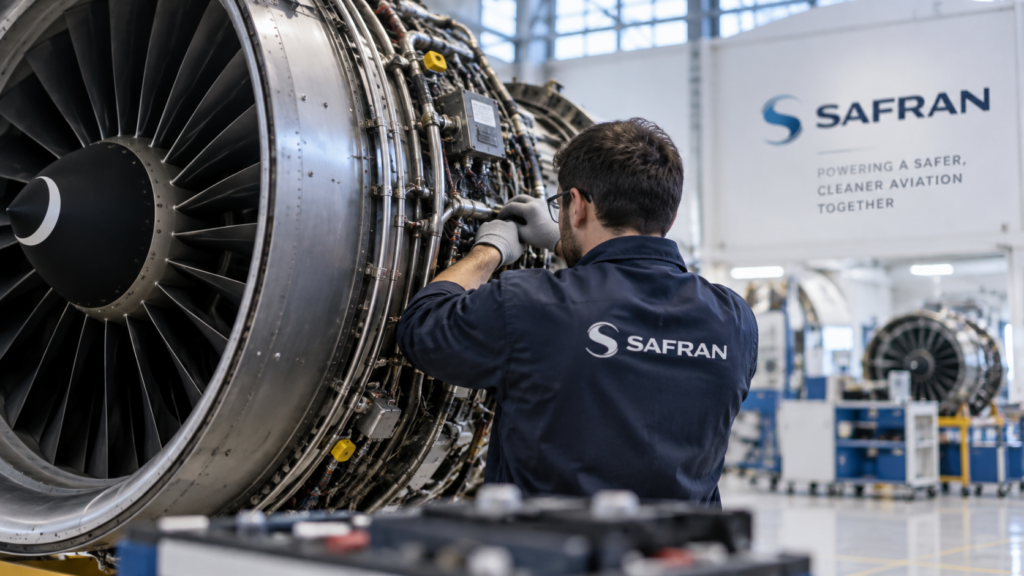
Read the storyAHLEX has been a valuable partner in welcoming and developing our newly hired mechanics. Their professionalism and flexibility have helped us build strong foundations for our employees’ new roles.
Safran Aircraft Engine Services Belgium
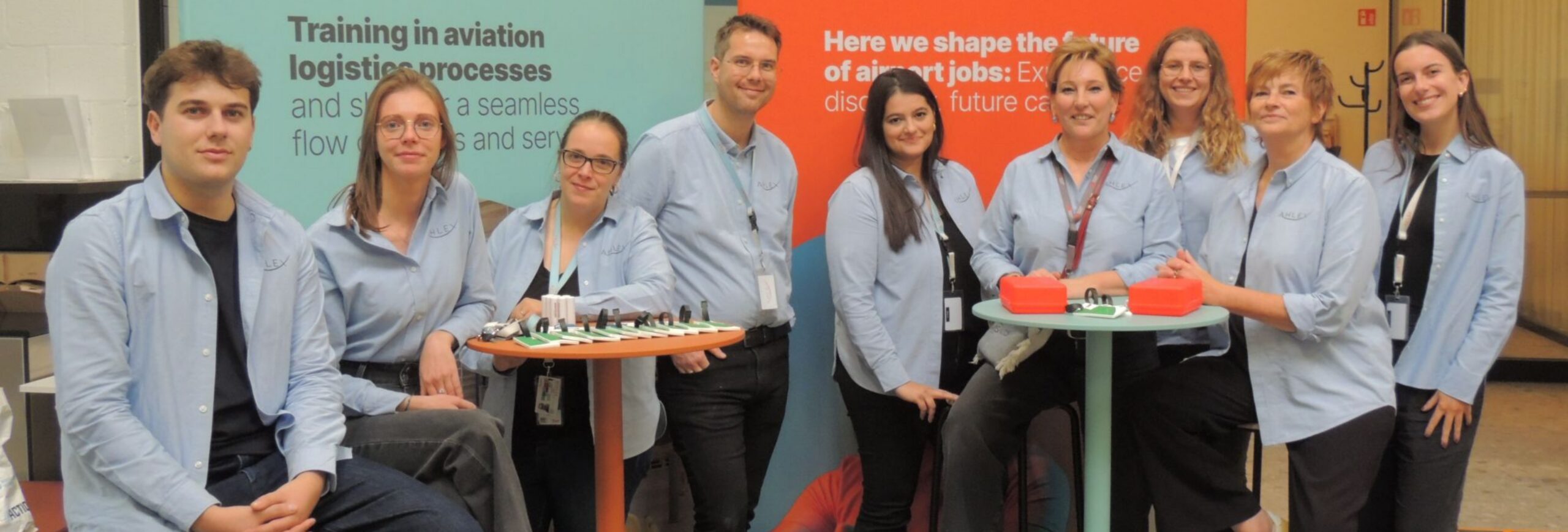
Are you facing a similar ramp-up, or do you need to standardise onboarding across roles and shifts? Talk to us about your challenge. We will map a path around your operation, your standards and your constraints.
Your challenge is ours, we build the right flow, not just the right course.
This is where AHLEX makes the difference. Your challenge is never one course, it is capability that must hold up in real work. So we work alongside your teams to design the right learning flow around your operation, your standards and your reality on the floor. Tailored and supported end to end.We bring the right experts and partners to the table, and combine the right content with the right mix of online, classroom and hands on practice, so your programme stays credible, current and operational, and your people perform safely and consistently across shifts.